A Beginner's Guide to Web Development in 2026
Web development can feel overwhelming from the outside — endless frameworks, tools and jargon. But the foundations are simpler than they look, and they haven't fundamentally changed. Here's a clear roadmap from absolute beginner to shipping real sites.
Key takeaways
- HTML, CSS and JavaScript are the three pillars — learn them first.
- Master fundamentals before reaching for frameworks.
- Build small real projects to cement what you learn.
- Responsive design and accessibility are non-negotiable today.
The three pillars

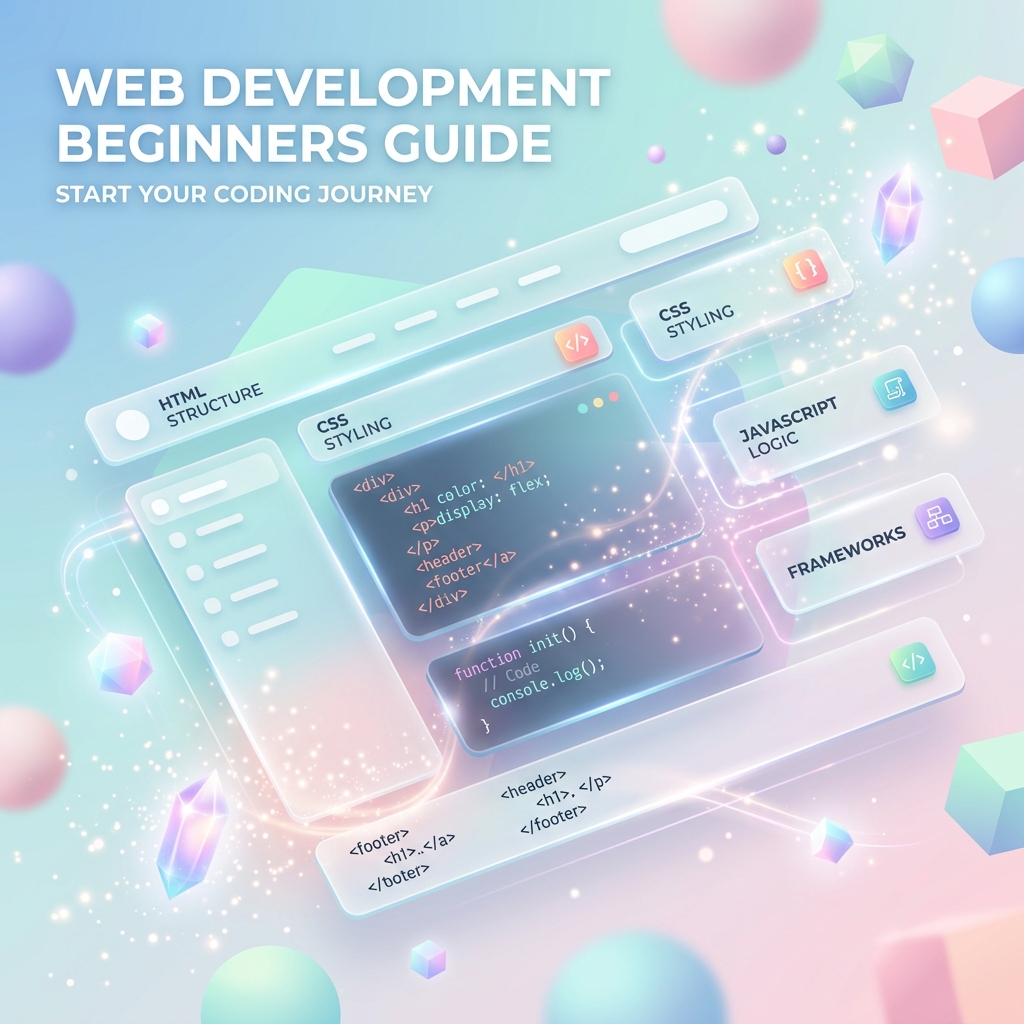
Every website, no matter how advanced, is built on three technologies. HTML defines structure and content — the headings, paragraphs and buttons. CSS controls presentation — colours, layout, spacing and responsiveness. JavaScript adds behaviour — interactivity, data fetching and dynamic updates.
Learn these in order. A solid grasp of HTML and CSS alone lets you build genuinely useful sites, and it makes everything that comes after far easier to understand.
Fundamentals before frameworks
It's tempting to jump straight to React, Next.js or the framework of the month, but frameworks are built on the fundamentals. If you don't understand how the DOM works or how CSS layout behaves, frameworks will feel like magic you can't debug.
Spend real time with vanilla JavaScript and plain CSS first. When you do adopt a framework, you'll learn it faster and use it far more effectively.
Learn by building
Tutorials teach concepts, but projects teach you to actually develop. Rebuild a landing page you admire, make a to-do app, then a small site with a form and some interactivity. Each project forces you to solve real problems and glue concepts together.
Along the way, make responsive design and accessibility habits, not afterthoughts — your sites should work on any screen and for every user from the very start.
Gowtham
Solo developer and creator, writing clear guides and building tools so you always have current, trustworthy content.