How to Convert Video to GIF (The Right Way)
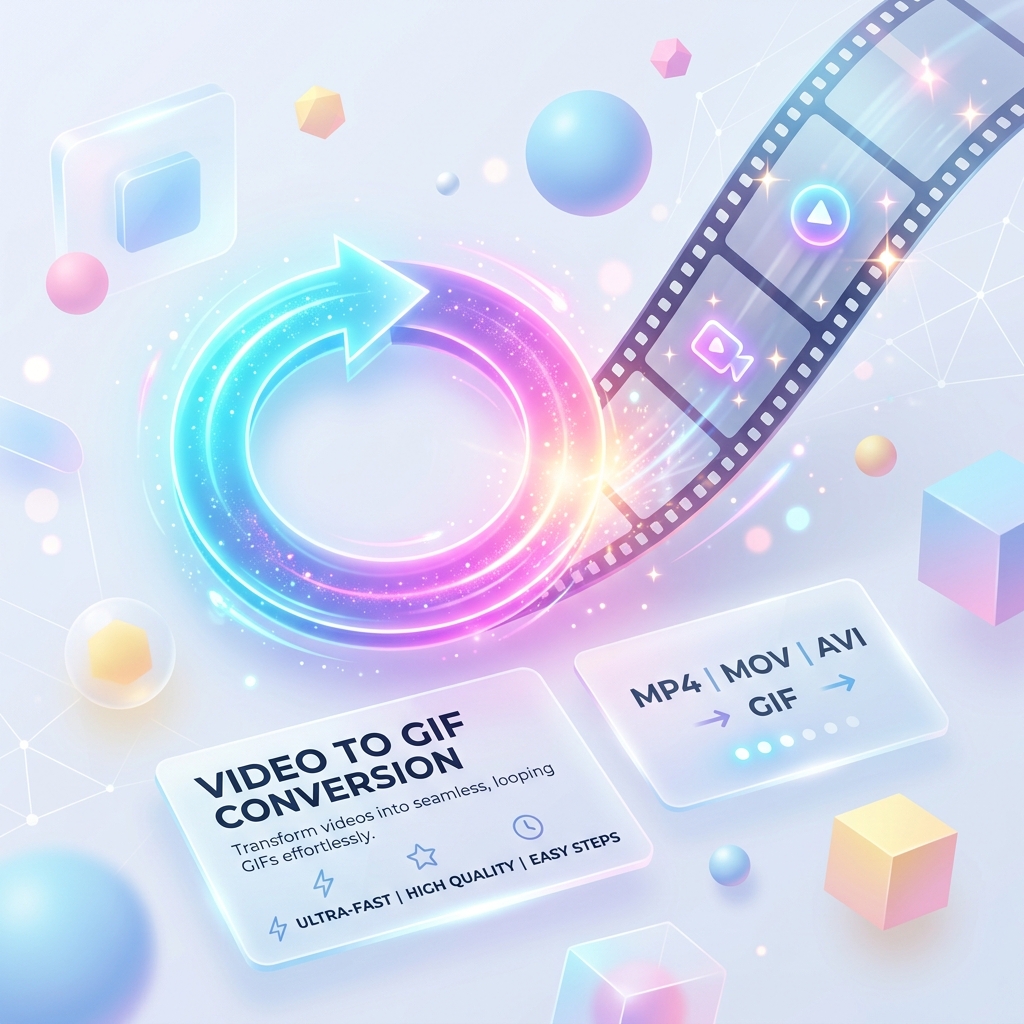
GIFs are the internet's favourite way to share a quick loop, but a careless conversion produces a huge, ugly file. A few simple choices around length, framerate and colour make all the difference between a crisp loop and a bloated mess.
Key takeaways
- GIF is limited to 256 colours — palette choice is everything.
- Shorter clips and lower framerates keep files small.
- Trim tightly and size deliberately before converting.
- For long or full-colour clips, consider a video format instead.
Understand GIF's limitations

The GIF format dates back decades and carries a hard limit: a maximum of 256 colours per frame. That's why gradients and video footage can look banded or grainy as a GIF. It also has no real compression for motion, so file sizes climb quickly with length and dimensions.
Knowing these constraints upfront is the key to working with the format instead of against it.
The settings that matter
Three dials control quality and size. Length: keep it to a few seconds — GIF is for moments, not scenes. Framerate: 10–15 fps is usually plenty and dramatically smaller than 30 fps. Dimensions: scale down to the size it'll actually display at rather than exporting full resolution.
A smart colour palette — optimised for the specific clip — also does a lot to keep the limited 256 colours looking clean.
When not to use a GIF at all
For anything longer than a few seconds or rich in colour, a short looping MP4 or WebM video will look far better and weigh a fraction as much. Most platforms now autoplay silent video loops that behave just like a GIF.
Reserve true GIFs for short, simple, widely-shareable loops where universal compatibility matters more than fidelity.
Gowtham
Solo developer and creator, writing clear guides and building tools so you always have current, trustworthy content.