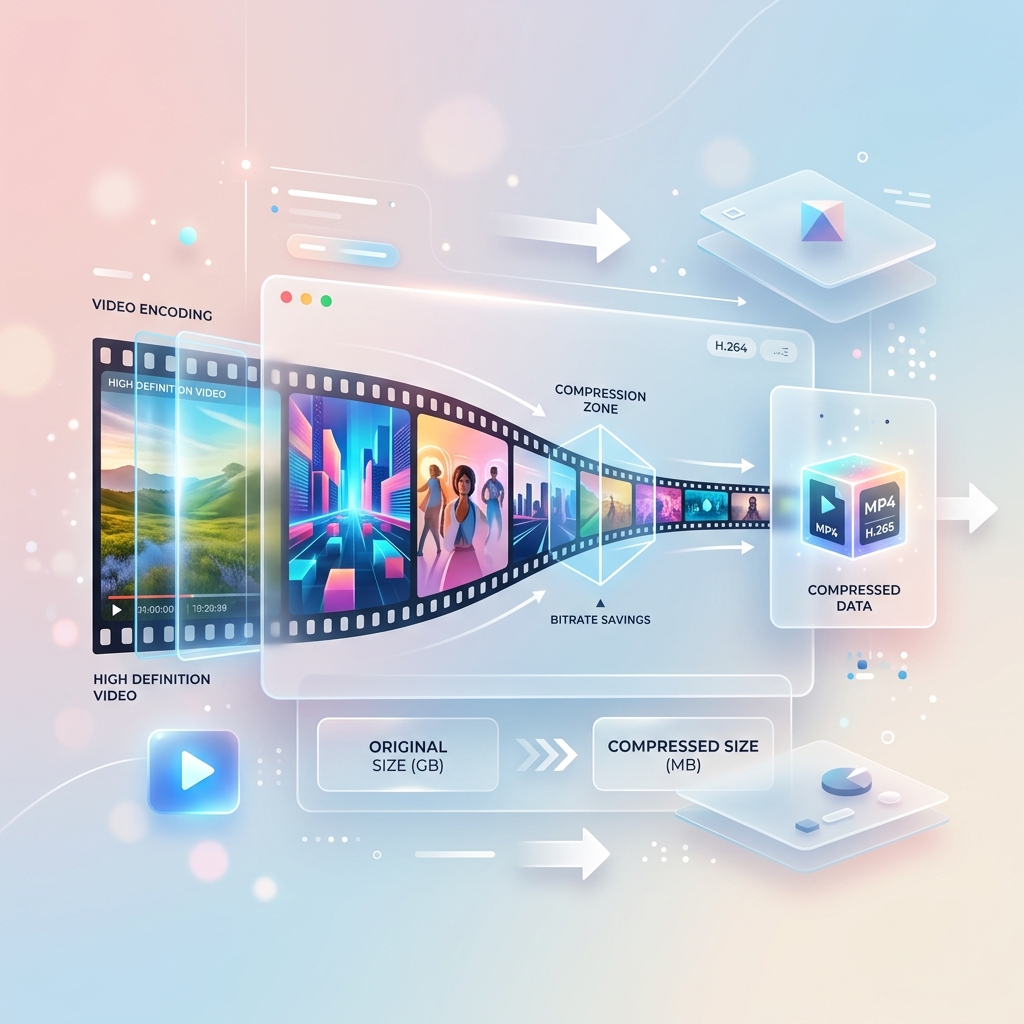
Best Video Formats Explained: MP4 vs WebM vs MOV
MP4, WebM, MOV, MKV — the list of video formats is long and confusing. The key insight is that a format is really two things: a container and a codec. Understand that split and choosing the right one becomes simple.
Key takeaways
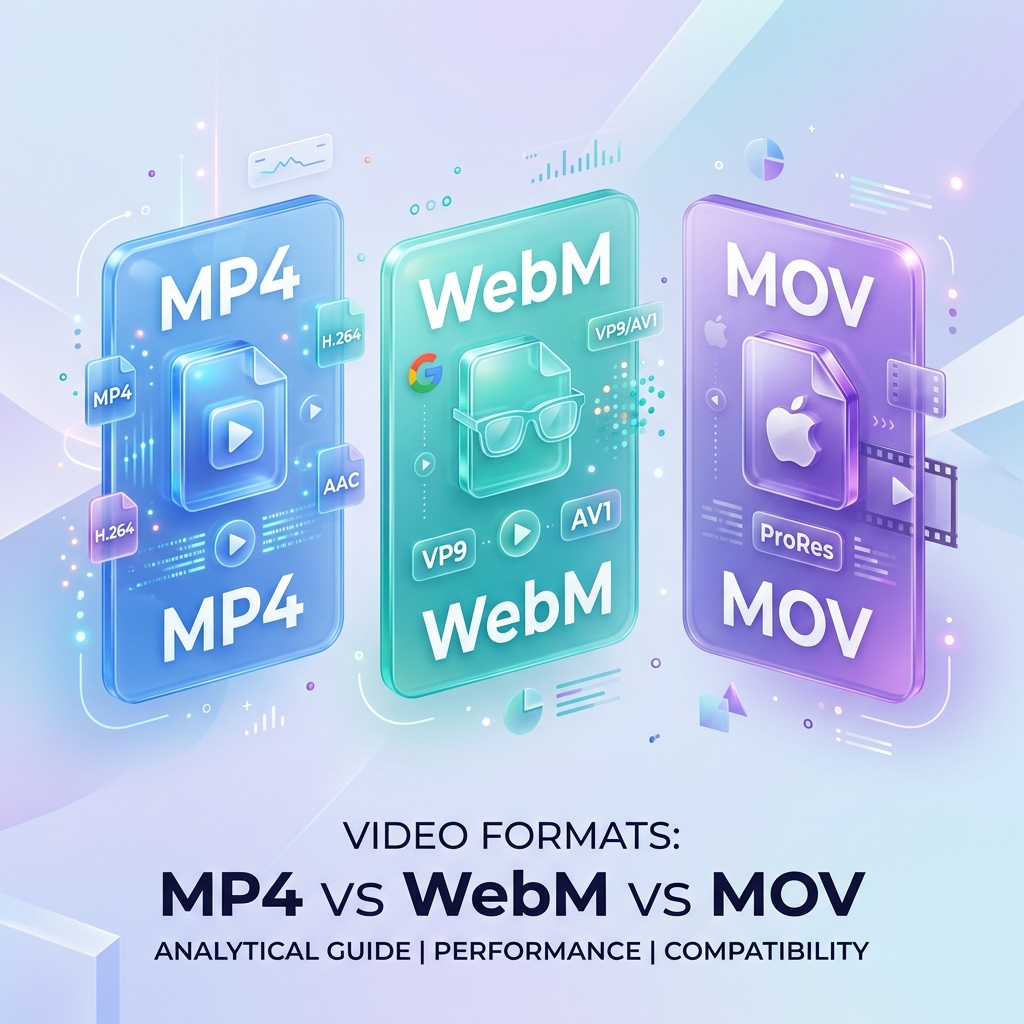
- A container (MP4, WebM, MOV) holds video, audio and metadata together.
- The codec (H.264, VP9, AV1) does the actual compression.
- MP4 with H.264 is the safest, most compatible choice everywhere.
- WebM is leaner for the web; MOV suits Apple editing workflows.
Container vs codec: the crucial distinction

A container is the wrapper — the .mp4 or .webm file — that bundles your video stream, audio stream, subtitles and metadata into one package. The codec is the algorithm that compresses the actual video inside. The same MP4 container can hold H.264, HEVC or AV1 video, which is why file extension alone doesn't tell the whole story.
When you pick a 'format', you're really choosing a container-plus-codec combination, and each pairing has different compatibility and efficiency characteristics.
The three formats compared
MP4 is the universal default. Paired with H.264, it plays on virtually every device, browser and platform ever made, which makes it the safest choice for sharing and social media. WebM, built around VP9 and AV1, is open, royalty-free and slightly more efficient — ideal for websites where you control playback.
MOV is Apple's QuickTime container, common in editing pipelines and screen recordings on macOS and iOS. It's excellent for editing but less friendly for distribution outside the Apple ecosystem.
Which one should you use?
For uploading to YouTube, Instagram or sending to a client: MP4 with H.264 every time. For a self-hosted website where load speed matters: WebM as the primary source with an MP4 fallback. For editing on a Mac before exporting: MOV is fine as an intermediate, but export to MP4 for delivery.
When in doubt, MP4 is rarely the wrong answer — its compatibility is unmatched.
Gowtham
Solo developer and creator, writing clear guides and building tools so you always have current, trustworthy content.